













Live FNAF4.io

911: Prey

Browser Instant Play Escape - Story

New Drops

See all

Game Description

911: Prey gameplay

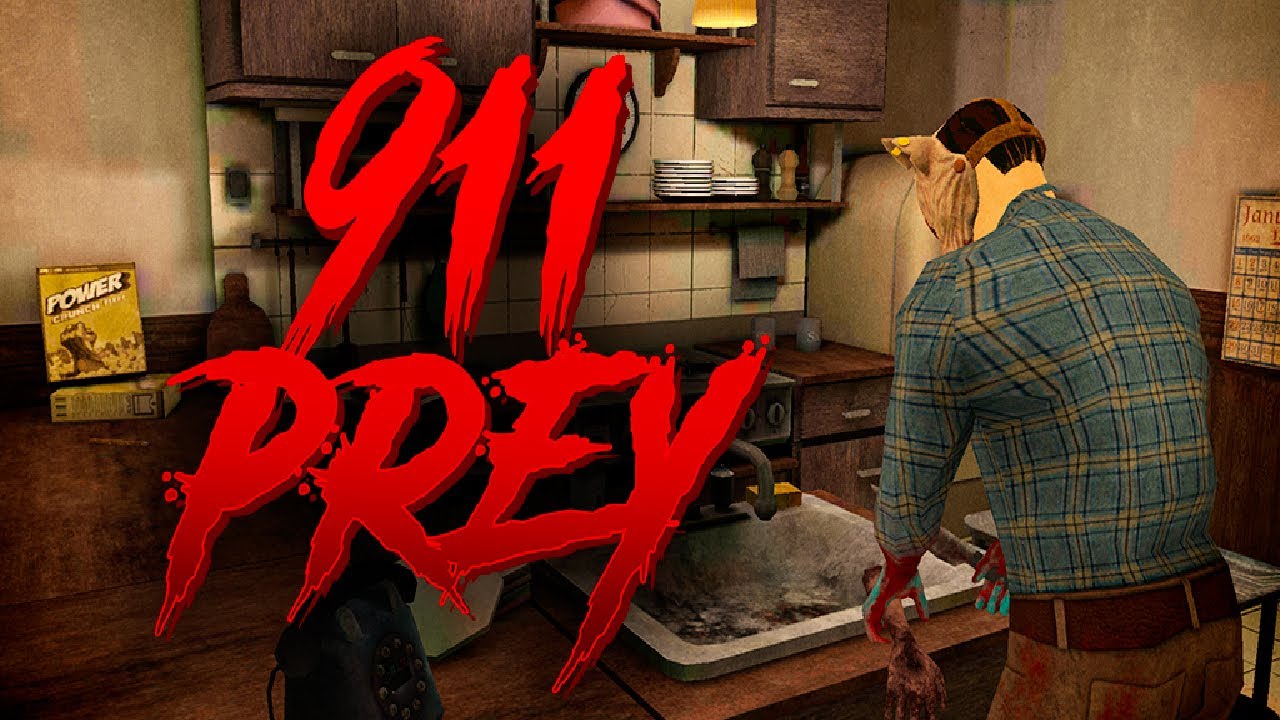
911: PREY

1. Game Overview

911: Prey is a first-person horror puzzle game that places you in one of gaming's most primal nightmare scenarios: you are a kidnapped teenager trapped inside a cannibal's house, and you have to find your own way out. There are no weapons to rely on, no allies to call, and no direct path to the exit. There is only you, the house, and the disturbing presence that lives in it.

The game draws its strength from its grounded, intimate setting. Unlike horror games set in sprawling facilities or supernatural landscapes, 911: Prey confines its horror to a single house — which makes every room feel genuinely dangerous and every item discovery feel significant. The cannibal pursuer is not an abstract monster; the house is their domain, and searching it for clues and escape tools while trying not to be detected is a constant exercise in nerve management.

What distinguishes 911: Prey from other escape-room horror titles is its multiple endings system. Your choices throughout the game — which areas you explore, which items you use, and which decisions you make at key moments — determine which of several possible endings you reach. This gives the game genuine replayability beyond simple mechanical improvement: experienced players can revisit it specifically to uncover endings they missed. Smart, methodical players who pay close attention to environmental details will not only escape — they'll escape the right way.

Key Details:

Detail Info
Genre First-Person Horror Puzzle / Escape
Difficulty Level Medium
Average Play Time 30–60 minutes per run
Best For Horror fans who enjoy puzzle-focused escape gameplay, environmental storytelling, and multiple-ending replayability

2. How to Play

Getting Started:

  1. The game begins with you inside the cannibal's house — do not move immediately; take a moment to assess your immediate surroundings.
  2. Search the room you start in thoroughly for items and environmental clues before opening any doors.
  3. Use found items to solve puzzles that unlock new areas of the house and advance your escape.
  4. Crouch and hide your tracks when necessary to avoid alerting the cannibal to your presence.
  5. Continue exploring, solving puzzles, and managing your concealment until you find your way out.

Basic Controls:

  • Move: WASD
  • Use Item / Interact: F or left mouse click
  • Select Inventory Item: Number keys 1–6
  • Crouch: C (reduces noise and visibility — essential for stealth sections)
  • Hint: H (provides a contextual clue if you're stuck on a puzzle)
  • Pause: P

Objective: Search the cannibal's house for useful items and clues, solve puzzles to unlock new areas, and find your way out — all while concealing your presence to avoid detection. Your decisions throughout determine which ending you reach.

3. Game Features & Highlights

Multiple endings system — player choices and decisions throughout the run determine which of several distinct endings are triggered, providing genuine replay value ✓ Immersive single-location horror — the intimate scale of a single house amplifies tension and makes every room discovery feel meaningful ✓ Integrated hint system — the H key provides contextual puzzle hints for players who are stuck, keeping the experience accessible without breaking immersion ✓ Stealth and concealment mechanics — crouching and track-hiding add a stealth dimension that complements the puzzle structure ✓ Environmental storytelling — clues and details scattered throughout the house reveal the cannibal's story and the circumstances of your capture for players who look carefully

4. Tips & Strategies

Beginner Tips:

  • Search every surface, drawer, and container in a room before leaving it — items needed for later puzzles are often found in areas that look empty at a glance.
  • Use the H key hint sparingly but without guilt — getting stuck on a puzzle for too long increases your exposure time in dangerous areas. A well-timed hint keeps the run moving safely.
  • Crouch whenever you're moving through areas where the cannibal may be nearby — the reduction in noise is significant and the movement speed penalty is worth the safety it provides.

Advanced Strategies:

  • Pay attention to every piece of environmental text, note, or visual detail you encounter — the multiple endings system means some narrative clues are also decision triggers that affect which conclusion you reach.
  • Build a mental map of the house as you explore — knowing which rooms connect to which exits helps you plan faster escape routes when the cannibal's position becomes threatening.
  • On repeat playthroughs targeting alternate endings, note which specific decisions or item interactions you made differently — the endings branch from specific choice points rather than general behavior, so targeted changes are more efficient than replaying the entire run differently.

What to Watch Out For:

  • Leaving traces: The game tracks whether you've concealed your presence effectively. Careless movement through certain areas can leave evidence that alerts the cannibal to your location even when you're not directly visible — use the crouch mechanic consistently rather than only in obvious danger moments.
  • Inventory mismanagement: The 6-slot inventory system means you may need to make decisions about which items to carry. Don't discard items unless you've confirmed they've been used — some items have delayed applications that aren't immediately obvious.

5. Game Elements Explained

The Puzzle and Item System: 911: Prey's progression is built around a classic adventure-game item-puzzle loop: find items, apply them to the right puzzles, unlock new areas, repeat. The house is divided into areas that become accessible as you solve the puzzles that secure them — each new area contains both new puzzles and new items that unlock further progress. The design is deliberately non-linear in places; some items found early in the run won't find their application until much later, requiring you to carry them through multiple areas before their purpose becomes clear. This creates a layered puzzle experience where observation and item retention matter as much as logical problem-solving. The hint system (H key) provides contextual guidance for players who find themselves genuinely blocked without undermining the satisfaction of solving puzzles independently.

The Stealth and Concealment System: Unlike horror games where avoidance means hiding in a static location until a pursuer passes, 911: Prey's stealth system is active and ongoing. The crouch mechanic reduces both your noise signature and your visibility profile, making it your primary tool for moving through the house without alerting the cannibal. Beyond crouching, the game tracks whether you're hiding your tracks in areas the cannibal monitors — neglecting this in certain locations can trigger alert states even without a direct encounter. The stealth layer doesn't dominate the game, but it adds meaningful texture to exploration: knowing when to move quickly and when to move carefully is a skill that develops over multiple runs and makes experienced players significantly harder to detect than first-timers.

The Multiple Endings System: The multiple endings are the feature that gives 911: Prey its longevity beyond a single playthrough. Rather than a single fixed conclusion, the game tracks your decisions across key moments — which clues you engaged with, which items you used and how, and which options you selected at branching decision points — and uses this to determine your ending. Some endings require discovering specific story details buried in the environment; others depend on choices that seem inconsequential in the moment. The result is a game that genuinely rewards replaying: experienced players can revisit it with specific ending targets in mind, making deliberate changes to their approach rather than simply playing faster. Understanding that endings branch from specific decisions rather than general playstyle is the key insight for efficient alternate-ending runs.

6. Frequently Asked Questions

Q: How do I use items I've collected? A: Select the item using its corresponding number key (1–6) from your inventory, then approach the puzzle or object you want to apply it to and press F or left-click to interact. If the item isn't the correct one for that interaction, nothing will happen — try a different item or explore further for additional context clues.

Q: What should I do if the cannibal detects me? A: Find the nearest concealment point immediately — a closet, under a bed, or behind a large object. Crouch and remain still until the detection alert subsides. Avoid running in a straight line away from the cannibal — it's loud and makes you easier to track. Once hidden, wait for the audio cues indicating the cannibal has returned to their routine before resuming exploration.

Q: How many endings does the game have? A: 911: Prey features multiple distinct endings tied to the decisions and discoveries you make throughout the run. Explore thoroughly, engage with all environmental story details, and pay attention to decision points — each ending reflects a different combination of choices made during that playthrough.

Q: Is the game compatible with mobile browsers? A: The WASD movement, mouse interaction, and number-key inventory system are optimized for desktop keyboard-and-mouse play. Mobile browser access is possible but the multi-key control scheme is significantly less comfortable on touchscreen. Desktop is the recommended platform.

Q: Can I use the hint system without it affecting my ending? A: Yes — the H key hint system provides contextual puzzle guidance without affecting the story decision tracking that determines your ending. Hints are purely navigational and puzzle-focused; they do not count as story decisions and won't push you toward or away from any particular conclusion.

7. Related Games You Might Enjoy

If you like 911: Prey, you might also enjoy: