

Live FNAF4.io

Im Not a Human

Browser Instant Play Horror - Survival

New Drops

See all

Game Description

Im Not a Human gameplay

I'M NOT A HUMAN

1. Game Overview

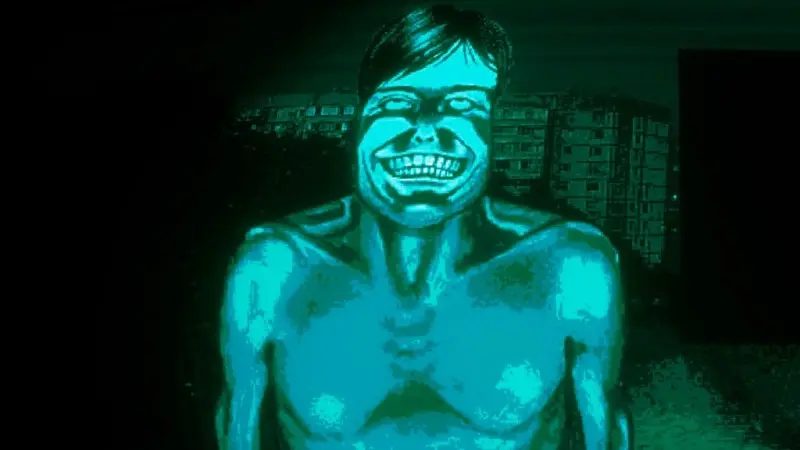
I'm Not a Human is a psychological horror game built around one of the most quietly disturbing premises in the genre: the people around you may not be people at all. Set in an environment that appears completely ordinary at first glance, the game gradually reveals that something is deeply, fundamentally wrong — and the only way to survive is to figure out what before it's too late.

The game operates on observation and judgment rather than reflexes or combat. You are not running from monsters or solving environmental puzzles — you are watching. Watching how people speak, how they move, what they emphasize, and what they avoid. The non-human beings in the game are disguised convincingly enough that a casual observer would never notice. But the cracks are there if you look for them: a gesture that's slightly wrong, a phrase that doesn't quite fit, a reaction that arrives a half-second too late. Every decision you make about who is real and who isn't carries consequences that can be fatal.

What makes I'm Not a Human genuinely unsettling is the slowness of its horror. There are no jump scares, no sudden reveals designed to shock you out of your seat. The dread accumulates through sustained observation — the growing realization that your read on this environment might be wrong, that the person you just trusted might not be a person at all. For fans of psychological horror who want a game that works on their mind rather than their nerves, this is a rare and rewarding experience.

Key Details:

Detail Info
Genre Psychological Horror / Interactive Mystery
Difficulty Level Medium
Average Play Time 20–40 minutes
Best For Fans of indie psychological horror, interactive fiction, and mystery games who enjoy observation-based gameplay over action

2. How to Play

Getting Started:

  1. The game begins in what appears to be a normal environment — take time to observe before making any decisions.
  2. Interact with characters and elements around you by clicking or tapping the screen.
  3. Pay close attention to speech patterns, physical gestures, and behavioral details that feel slightly off.
  4. Use your observations to make judgment calls about which characters are human and which are not.
  5. Each decision advances the story — choose carefully, as mistakes carry significant consequences.

Basic Controls:

  • Interact / Select Action: Left mouse click or touchscreen tap
  • Observe: Watch and listen carefully before interacting — the game rewards patience over speed

Objective: Identify the non-human beings disguised among the apparently normal environment through careful observation of behavioral cues, language, and physical details. Make the right judgment calls to survive. Make the wrong ones, and the outcome will be horrific.

3. Game Features & Highlights

Observation-based gameplay — success depends entirely on how carefully you watch and listen, not on reflexes or action skill ✓ Psychological pacing — deliberately slow tension that builds through accumulation rather than sudden scares ✓ High-stakes decision system — every choice about who to trust and who to suspect carries real consequences that shape the story's outcome ✓ Disguised entity design — non-human beings are convincingly hidden within apparently normal behavior, rewarding attentive players who catch subtle inconsistencies ✓ Mystery narrative — the full picture of what is happening and why unfolds gradually through observation and choice rather than exposition

4. Tips & Strategies

Beginner Tips:

  • Don't rush any interaction — the game is not timed in a way that punishes careful observation. Take as long as you need to assess each character before making a judgment call.
  • Listen to how characters speak as much as what they say — non-human beings often use language in ways that are technically correct but emotionally or contextually wrong in subtle ways.
  • When something feels slightly off but you can't identify exactly why, trust that feeling and continue observing before deciding — the game's design rewards exactly this kind of cautious instinct.

Advanced Strategies:

  • Cross-reference behavioral details across multiple observations of the same character — a single odd moment could be coincidence, but a pattern of subtle wrongness is a reliable indicator of non-human status.
  • Pay attention to how characters respond to each other, not just how they respond to you — non-human beings may interact with genuine humans in ways that reveal their nature when you observe from outside the interaction.
  • In scenes with multiple characters, establish your assessment of the most obvious cases first and use those as anchors for evaluating the more ambiguous ones — known humans and known non-humans provide behavioral reference points that make edge cases clearer.

What to Watch Out For:

  • Over-analysis paralysis: The game's slow pace and the weight of each decision can cause players to second-guess observations they've already made correctly. Trust accumulated evidence over single-moment doubt — if a character has shown multiple consistent signs of being non-human, a single apparently normal moment doesn't invalidate that assessment.
  • Missing environmental context: The non-human beings exist within a specific environment whose normal state you need to understand before you can identify deviations. Don't fixate exclusively on characters at the expense of understanding the setting — environmental details provide the baseline against which wrong behavior becomes visible.

5. Game Elements Explained

The Observation System: I'm Not a Human's gameplay lives entirely in its observation system — the process of watching characters closely enough to distinguish subtle wrongness from normal human behavior. The non-human beings are not cartoonishly obvious; they are designed to pass casual inspection and only reveal themselves under sustained, attentive scrutiny. The game provides no explicit checklist of tells — instead, it trusts players to develop their own read on what constitutes normal versus wrong behavior within this specific environment. This makes the observation system feel like genuine detective work rather than a mechanical spot-the-difference exercise. The satisfaction of correctly identifying a non-human being comes from the quality of your own observation, not from the game confirming you've ticked the right boxes.

The Decision and Consequence System: Every judgment call you make in I'm Not a Human feeds directly into the game's consequence system, which tracks whether you're correctly identifying the non-human beings or making dangerous mistakes. A wrong judgment — trusting a non-human or suspecting a genuine human — doesn't always produce an immediate consequence. Sometimes the cost of a mistake is delayed, surfacing later in the story in ways that are directly traceable back to the original error. This delayed consequence design is one of the game's most psychologically effective features: the awareness that a mistake you made earlier might still be working against you creates sustained low-level dread that complements the observation tension. The game's multiple possible outcomes reflect the cumulative quality of your judgment across all decisions, not just the final one.

The Psychological Horror Design: Unlike most horror games that deliver fear through external threats — monsters, pursuers, sudden scares — I'm Not a Human generates its horror through internal uncertainty. The question it poses — how do you know the people around you are really people? — is one that becomes genuinely unsettling the longer you sit with it. The game's deliberately slow pace is not a design limitation; it is the mechanism by which the horror operates. By refusing to rush you, it gives you time to become genuinely invested in the question of who is real, which makes the moments of revelation or failure land with real psychological weight. Players who approach this as an action game will find it unsatisfying; players who accept its terms and engage with the observation will find it haunting.

6. Frequently Asked Questions

Q: How do I tell the difference between human and non-human characters? A: There is no single universal tell — the game requires you to build your read through sustained observation of each character individually. Focus on behavioral consistency: genuine humans behave in emotionally and contextually coherent ways, while non-human beings produce subtle mismatches between what they say, how they say it, and how they physically present themselves. The more you observe any single character, the clearer these patterns become.

Q: What happens if I make a wrong judgment call? A: Consequences vary depending on the nature of the mistake and when in the game it occurs. Some wrong calls produce immediate results; others surface later in ways you may not immediately connect to the original decision. The game tracks your judgment quality across all decisions — a single mistake may be recoverable, but a pattern of wrong calls compounds into outcomes that are difficult or impossible to survive.

Q: Is I'm Not a Human suitable for players who don't enjoy action horror games? A: It is specifically designed for exactly this audience. There are no combat mechanics, no chase sequences, and no jump scares built around sudden audio or visual shocks. The entire experience is observation, choice, and the slow accumulation of psychological dread. Players who find action horror overwhelming but are drawn to horror as a genre will find this a highly accessible and genuinely effective experience.

Q: Is the game playable on mobile? A: Yes — the touchscreen tap interaction mirrors the mouse-click mechanic exactly, making the game fully playable on mobile devices without any control adaptation. The observation-focused gameplay requires no precise inputs that would disadvantage touchscreen players.

Q: How long is the game and does it have multiple endings? A: A single playthrough runs approximately 20–40 minutes depending on how much time you spend observing before making decisions. The game's outcome reflects the cumulative quality of your judgment calls throughout — different decision patterns lead to meaningfully different conclusions, giving the game genuine replay value for players who want to discover all possible outcomes.

7. Related Games You Might Enjoy

If you like Im Not a Human, you might also enjoy: